HELLO, I’M MICHAEL.
I make things,
fix things, and figure out how they work.
I have a hard time leaving a solvable problem alone.
Give me a rough idea, an awkward fit, a machine that could work better, or a part that no longer exists, and I want to understand it. I measure it, sketch it, model it, make a version, find out what I missed, and make the next one better. Sometimes that becomes a piece of furniture or a CNC fixture. Sometimes it becomes a printed replacement part, an FPV aircraft, a shop tool, or a bit of software.
I have never been especially interested in staying inside one medium. Woodworking taught me to read material and respect the order of operations. Fabrication and CNC work sharpened my attention to tolerances, repeatability, and what actually happens on the shop floor. CAD, 3D printing, electronics, and code gave me more ways to test an idea and connect one process to another.
Those directions may look unrelated from a distance, but the working habit is the same: understand the real constraint, build something useful around it, and keep improving it until it earns its place. That is why focused fixes belong beside full builds here. A replacement wardrobe fitting, a threaded jar lid, or a better tool fork can reveal just as much thinking as a finished table or a complete machine.
A HANDS-ON BACKGROUND
A career built by adding capabilities.
I started in the construction trades, working in concrete resurfacing and carpentry and moving from laborer to project supervisor. That work taught me how much the result depends on preparation, communication, and the sequence behind the visible finish. It also made process improvement a daily habit: if a task was slow, awkward, inconsistent, or harder than it needed to be, I looked for a better way to do it.
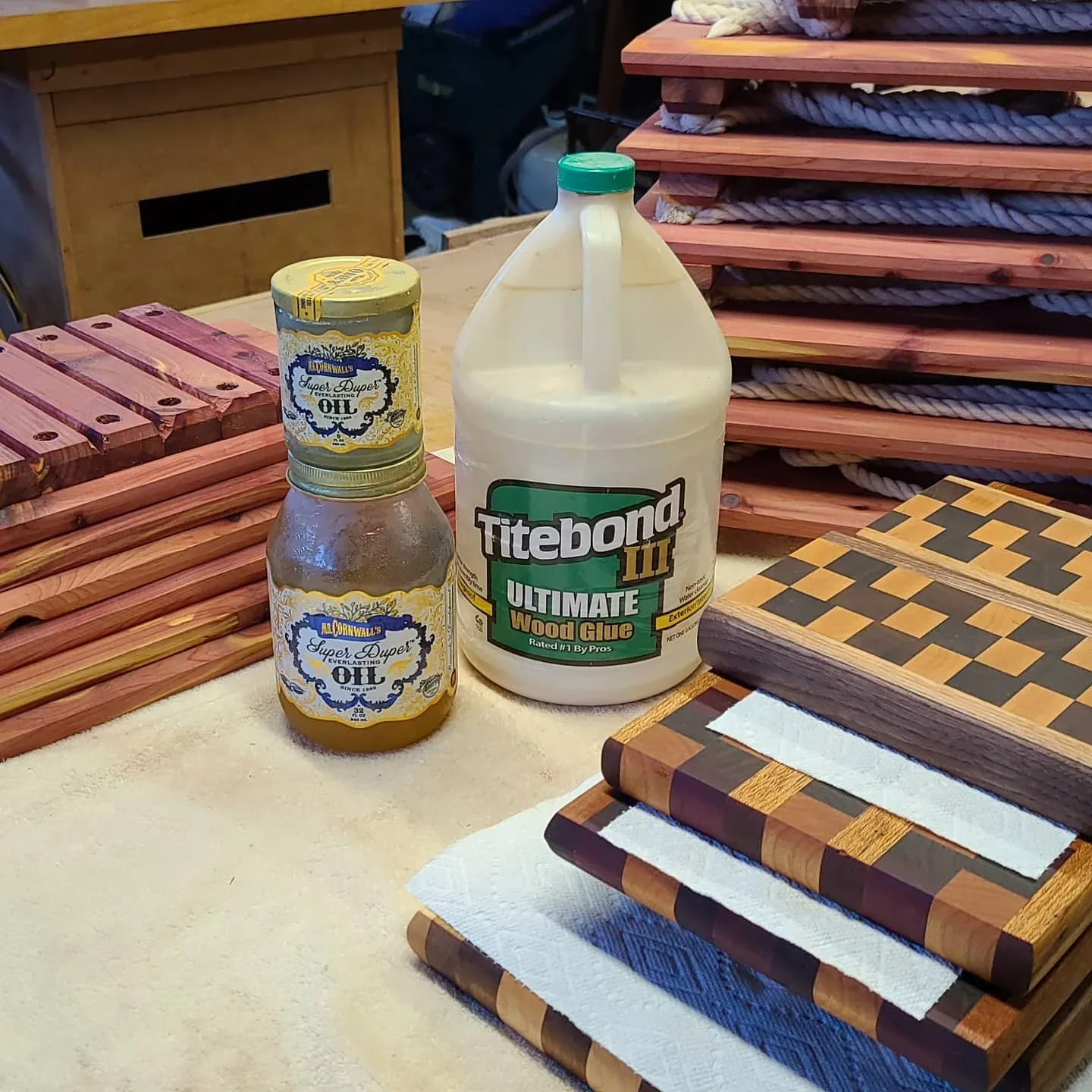
Mike's Functional Artistry grew from the same approach. Clients often arrived with an idea that existed mostly in their head. My job was to listen closely, turn it into a design they could react to, and then make the physical object accurately. Along the way I began designing and printing my own jigs, templates, and one-off tools whenever the work needed an interface that did not exist yet.
A manufacturing apprenticeship led into CNC operation and fabrication engineering. Software training added HTML, CSS, JavaScript, React, TypeScript, APIs, databases, and Git to the toolbox. I did not see that as a departure from making physical things. Code is another way to organize a system, test an idea, document decisions, and remove friction from the work.
Today, as an engineering manager at Acoufelt, I work at the connection between engineering and operations. I care about clear standards, useful documentation, scalable systems, and supporting the people who have to make those systems work every day. The materials and job titles have changed over time, but the thread is consistent: learn what the problem actually needs, bring the right disciplines together, and leave the process stronger than I found it.
Read the career profile →Follow the work your way.
The full collection keeps the range intact: furniture, repairs, CNC work, machines, electronics, software, models, and the tools behind them. The Professional view is a more direct path through selected contributions and career-relevant projects.
Elsewhere on the internet.
Mike’s Functional Artistry holds more of my earlier woodworking and custom-object work. Jerky_FPV follows the aircraft, printers, and other builds that tend to take over the bench.